What GSM actually means
GSM stands for grams per square metre. It is simply how much one square metre of that paper weighs. A higher number means a thicker, stiffer, heavier sheet. Ordinary photocopier paper sits around 70 to 80 gsm. A visiting card at 350 gsm is roughly four and a half times heavier for the same area, which is why one bends in your fingers and the other does not.
GSM is not the same as thickness, though the two usually move together. Two sheets at the same GSM can feel different depending on how the paper was made. A textured or uncoated sheet feels bulkier than a coated art paper of identical weight. This is why we send a physical sample rather than asking you to choose from a number on a page.
Carbonless paper, and why books use it
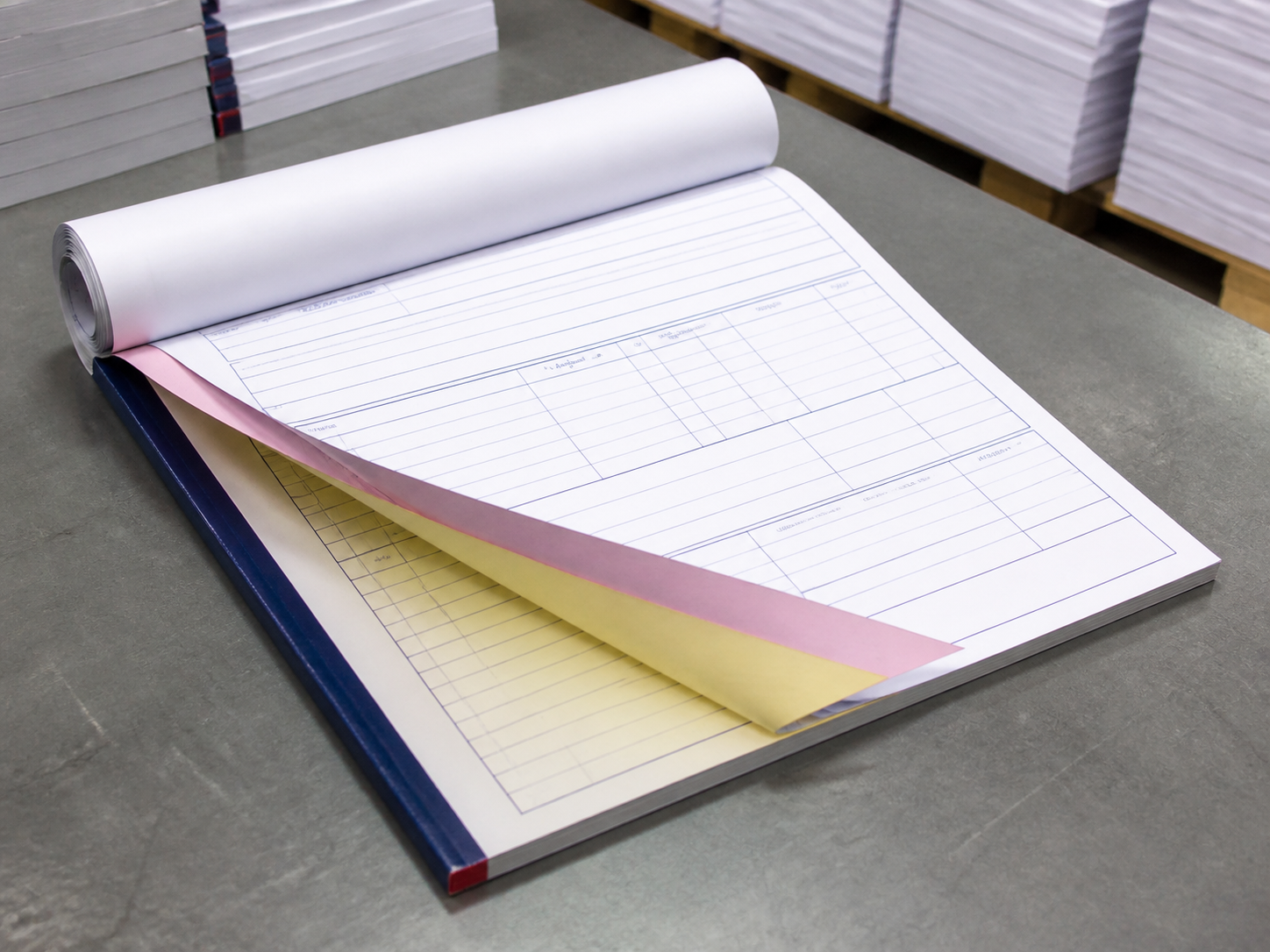
Older bill books used a loose sheet of carbon paper that the clerk had to slide between copies, and that everyone eventually lost. Carbonless paper, often called NCR, replaces that. The back of each sheet is coated with microscopic capsules of ink and the front of the sheet below is coated to react with them. Pen pressure bursts the capsules and the writing appears on every copy at once.
Carbonless sheets are deliberately lighter, usually 50 to 60 gsm per copy, because pressure from a ballpoint has to travel through the whole set. This is exactly why a four copy LR book uses thinner paper than a two copy challan book. It is not a cost saving, it is a functional requirement. Copies are colour coded white, pink, yellow and blue so anyone in the yard knows which copy belongs to whom without reading it.
Lamination and finishing
Matt lamination gives a soft, non reflective surface that resists fingerprints and feels more restrained. It is the usual choice for senior management cards and for anything a client will hold in a meeting. Gloss lamination makes colours look deeper and brighter and stands up better to handling, which suits sales teams and anything going into a trade fair.
Spot UV puts a clear raised gloss over selected areas only, usually a logo, on an otherwise matt card. Foil stamping presses metallic gold or silver into the surface, and blind embossing raises the shape with no ink at all. All three are pressure processes, so they need a stiff enough sheet underneath. On 350 gsm they sit beautifully. On thin card they crack.